| | | | | Save Money $$$ Build your own high quality solar street light "Plug and Play" design | | LED Chip 12~24V or 85V~260V Thermal Solar street light fixtures, driver and controller included |
The LED Chip will Guarantee a 500% better lighting area coverage over
High Pressure Sodium, with an energy savings of no less then 50% to 75%.
Rated LED life span is 50,000 to 100,000 hours or equal to 12 years operation time. | | | | LED light details are being added daily, Luminance, Photometric Results and much more. | | | 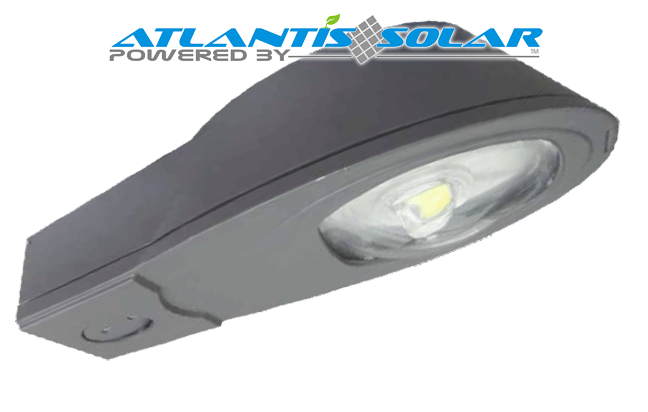 | | 680M Thermal LED Chip Street Light Fixture | | | | Details: | 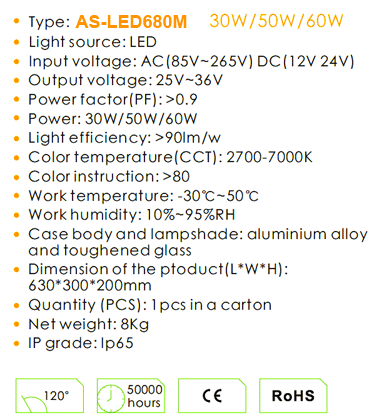 | 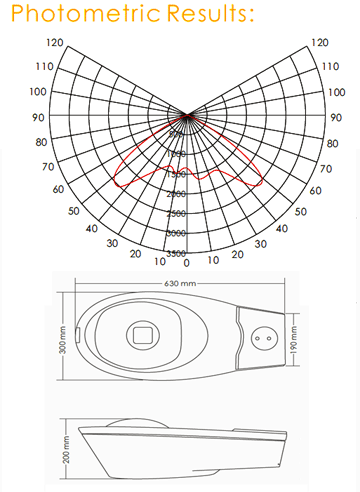 |
| | Atlantis Solar LED Chip Street Light "Printable Flyers" -Click Here- |
| High Power Solar LED Street Light:
| - Rated voltage: DC12V-24V-36V or AC 85V~260V
- Low power consumption: 10w to 200w
- Long time: 50,000h to 100,000h at 12 years operational time
- High-efficiency light, Light weight, Small power consumption, Large power factor.
- Applicable of places: Highway; Elevated Railway; tunnels; bridges; ports, banks; freight yard and Building security lighting.
- High light efficiency: power factor: >0.9, THD<20%
- Robust design: shockproof
| | | | | High Pressure Sodium 500 watts | LED 100 watts | 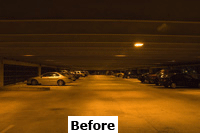 | 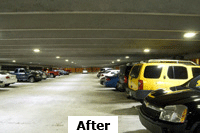 | |
High pressure sodium left versus LED lighting right. LED lighting is closer to true daylight because temperature can be more precisely controlled. True to daylight translates to the perception of greater safety in parking garages. On roadways it means less visual fatigue. In architectural and accent lighting LED's allow improved lighting rendition. LED's start instantaneously and do not flicker or hum. They produce almost no heat and maintenance is reduced because of fewer replacements, and of course the main advantage: they require less energy.
| | | | Lighting Efficiency Comparison
Just as an automobile's fuel efficiency is measured in miles per gallon, light bulb efficiency is measured in terms of lumens per watt—the amount of light produced for each watt of electricity consumed. More lumens per watt means more light for your money | | | | Fluorescent (tubular) | | Life span: | 10,000 - 20,000 hours | | Pros: | bulb burns cooler; very efficient; can come in various CRI ratings; comes in different color temperatures | | Cons: | not dimmable; fixtures are more costly; known to flicker at times. | | Efficiency: | 33 - 100 lumens per watt | | Uses: | General, floodlights | | Notes: | frequent switching on and off reduces efficiency. | | | (TOP) | | Compact Fluorescent | | Life span: | Up to 10,000 hours | | | Pros: | efficient | | | Cons: | cost of bulb; sometimes they can't physically fit; to replace incandescent bulbs | | | Efficiency: | 44 - 80 lumens per watt | | | Uses: | General lighting | | | Notes: | frequent switching on and off reduces efficiency. | | | | (TOP) | | | Metal Halide | | Life span: | 6,000 - 10,000 hours | | | Pros: | extremely efficient; give a brilliant light; bulbs come in different color temperatures; good color rendering. | | | Cons: | cost of both fixture and bulb; burns hot | | | Efficiency: | 60 - 125 lumens per watt | | | Uses: | places where a lot of light is needed such as outdoor areas and retail shops. Used frequently in sports arenas, stadiums, auditoriums, and convention halls | | | Notes: | not to be used near flammable materials. Bulbs usually must burn in a certain position. | | | | (TOP) | | | LED | | Life span: | 30,000 - 80,000 hours (100,000 hours) | | | Pros: | High durability - no filament or tube to break; long life span; low power consumption; low heat generation | | | Cons: | Pays for itself immediately | | | Efficiency: | 80 - 200 lumens per watt | | | Uses: | wide variety of uses including general lighting, accent lighting, decorative lighting, home, parks, shopping centers, streets and highways. (Uses are unlimited) | | | Notes: | LED technology is relatively new, and is changing every day. The quality and efficiency of the bulbs / chips are improving all the time.
The ratings in parentheses (above) are the predicted improvements which are expected to come about within the next few years. | | | | (TOP) | | | Mercury Vapor | | Life span: | 1600 - 6000 hours | | | Pros: | more efficient than incandescent and halogen; gives a nice color to landscapes. | | | Cons: | lowest efficiency of the HID type bulbs; dims rapidly; bad color rendering | | | Efficiency: | 20 - 63 lumens per watt | | | Uses: | landscape illumination, outdoor lighting | | | Notes: | produce a blue-green light | | | | (TOP) | | | High Pressure Sodium | | Life span: | 18,000 - 24,000 hours | | | Pros: | extremely efficient, long lasting, | | | Cons: | bad color rendering, produces yellowish light; slowly lose their brightness with short period of time, operates very hot and uses a lot of energy. | | | Efficiency: | 60 - 125 lumens per watt | | | Uses: | very popular for indoor horticulture, outdoor and industrial applications | | | | (TOP) | | | Low Pressure Sodium | | Life span: | approximately 16,000 hours | | | Pros: | one of the most efficient bulbs there is, long life span. | | | Cons: | worst color rendering (monochromatic) of all the bulbs, initial setup can be costly | | | Efficiency: | 90 - 180 lumens per watt | | | Uses: | security lighting or indoor applications like stairwells | | | Notes: | monochromatic - all colors under this light appear black, white, or shades of gray. | | | | | The customer should be made aware of lamp efficiencies and operational life in situations where a lamp is to be left on for long periods of time or is not easily accessible for replacement. The energy consumption of a large lighting system is considerable.
For example in a commercial building the energy costs of the lighting system may be 30 to 50% of the total energy costs. | | | | |