| | |  | Atlantis Solar / Atlantis LED
Portable / Light Bulb Energy Usage Testing Case
(LED - Incandescent -Florescent - Halogen) |
| Save Money $$$ Time to have a brighter healthier future with LED
(Think about the durability, longevity, efficiency and over all savings) | | Atlantis LED Portable LED / Traditional Light Energy Demo Showcase | 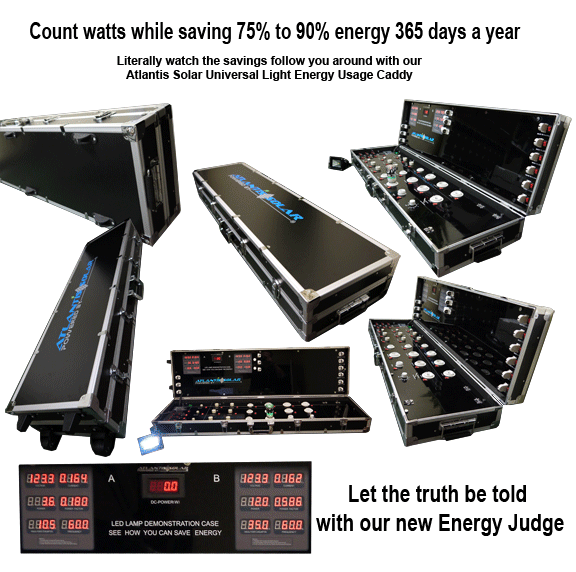 | | Atlantis LED portable LED / Traditional Light
Energy Comparison Travel Demo Show Case | | Features and Benefits:
» 12V to 240V
» AC ~ DC testing
» AC stripped wire plugs
» DC stripped wire plugs
» Universal DC International energy input plug
» Light modulator
» Light dimming switch
» Main showcase power energy switch
» 24 Hour power consumption led reading
» AC energy consumption led reading
» DC energy consumption led reading
» Energy consumption indicator real time readings
» Energy real time working current readings
» Energy real time input working voltage
» Energy real time input working Frequency
» Energy real time input working voltage
» Energy usage reading real time multiple MR16 sockets
» Energy usage reading real time multiple GU10 sockets
» Energy usage reading real time multiple E14 sockets
» Energy usage reading real time multiple E24 sockets
» Energy usage reading real time multiple E27 sockets
» Energy usage reading real time multiple T-Bar 120cm / 48 inches LED connectors
» Energy usage reading real time multiple T-Bar 120cm / 48 inches Fluorescent connectors
» Energy usage reading real time multiple T-Bar 60cm / 24 inches LED connectors
» Energy usage reading real time multiple T-Bar 60cm / 24 inches Fluorescent connectors
» Travel demo show case storage compartment
Let our Atlantis LED portable energy light showcase be the judge in saving you energy while giving you the best possible solution to your security, peace of mind, affordability, and energy savings.
In a growing world population that strives for better ways to conserve energy, reducing environmental health hazards, and pass this technology to our children for a healthier environment, is essential in today's world.
But most of all Atlantis LED provides a high quality, affordable way of living, while taking part in the fight to preserve the gifts that Mother Nature has given all of us.
Today is your day, to start being concerned to how our world will be tomorrow, next month, next year, and many years to follow. |
| Lighting Efficiency Comparison
Just as an automobile's fuel efficiency is measured in miles per gallon, light bulb efficiency is measured in terms of lumens per watt—the amount of light produced for each watt of electricity consumed. More lumens per watt means more light for your money
| | CFL | | Life span: | 3000 to 15000 hours. | | Pros: | efficient | | Cons: | cost of bulb; sometimes they can't physically fit; to replace incandescent bulbs | | Efficiency: | 44 - 80 lumens per watt after warm up | | Uses: | General lighting | | Notes: | frequent switching on and off reduces efficiency. | | Compact Fluorescent | | Life span: | Up to 10,000 hours | | Pros: | efficient | | Cons: | cost of bulb; sometimes they can't physically fit; to replace incandescent bulbs | | Efficiency: | 44 - 80 lumens per watt | | Uses: | General lighting | | Notes: | frequent switching on and off reduces efficiency. | | | (TOP) | | Metal Halide | | Life span: | 6,000 - 10,000 hours | | Pros: | extremely efficient; give a brilliant light; bulbs come in different color temperatures; good color rendering. | | Cons: | cost of both fixture and bulb; burns hot | | Efficiency: | 60 - 125 lumens per watt | | Uses: | places where a lot of light is needed such as outdoor areas and retail shops. Used frequently in sports arenas, stadiums, auditoriums, and convention halls | | Notes: | not to be used near flammable materials. Bulbs usually must burn in a certain position. | | | (TOP) | | LED | | Life span: | 30,000 - 80,000 hours (100,000 hours) | | Pros: | High durability - no filament or tube to break; long life span; low power consumption; low heat generation, no radiation or glare, high impact resistant. | | Cons: | Pays for itself immediately | | Efficiency: | 80 - 200 lumens per watt | | Uses: | wide variety of uses including general lighting, accent lighting, decorative lighting, home, parks, shopping centers, streets and highways. (Uses are unlimited) | | Notes: | LED technology is relatively new, and is changing every day. The quality and efficiency of the bulbs / chips are improving all the time.
The ratings in parentheses (above) are the predicted improvements which are expected to come about within the next few years. | | | (TOP) | | Mercury Vapor | | Life span: | 1600 - 6000 hours | | Pros: | more efficient than incandescent and halogen; gives a nice color to landscapes. | | Cons: | lowest efficiency of the HID type bulbs; dims rapidly; bad color rendering | | Efficiency: | 20 - 63 lumens per watt | | Uses: | landscape illumination, outdoor lighting | | Notes: | produce a blue-green light | | | (TOP) | | High Pressure Sodium | | Life span: | 18,000 - 24,000 hours | | Pros: | extremely efficient, long lasting, | | Cons: | bad color rendering, produces yellowish light; slowly lose their brightness with short period of time, operates very hot and uses a lot of energy. | | Efficiency: | 60 - 125 lumens per watt | | Uses: | very popular for indoor horticulture, outdoor and industrial applications | | | (TOP) | | Low Pressure Sodium | | Life span: | approximately 16,000 hours | | Pros: | one of the most efficient bulbs there is, long life span. | | Cons: | worst color rendering (monochromatic) of all the bulbs, initial setup can be costly | | Efficiency: | 90 - 180 lumens per watt | | Uses: | security lighting or indoor applications like stairwells | | Notes: | monochromatic - all colors under this light appear black, white, or shades of gray. | | | | | Every one is plugging in! ® "GO GREEN" | | | | The customer should be made aware of lamp efficiencies and operational life in situations where a lamp is to be left on for long periods of time or is not easily accessible for replacement. The energy consumption of a large lighting system is considerable. For example in a commercial building the energy costs of the lighting system may be 30% to 50%% of the total energy costs. | | | | | |